01614578100
 hello@alexanderclifford.co.uk



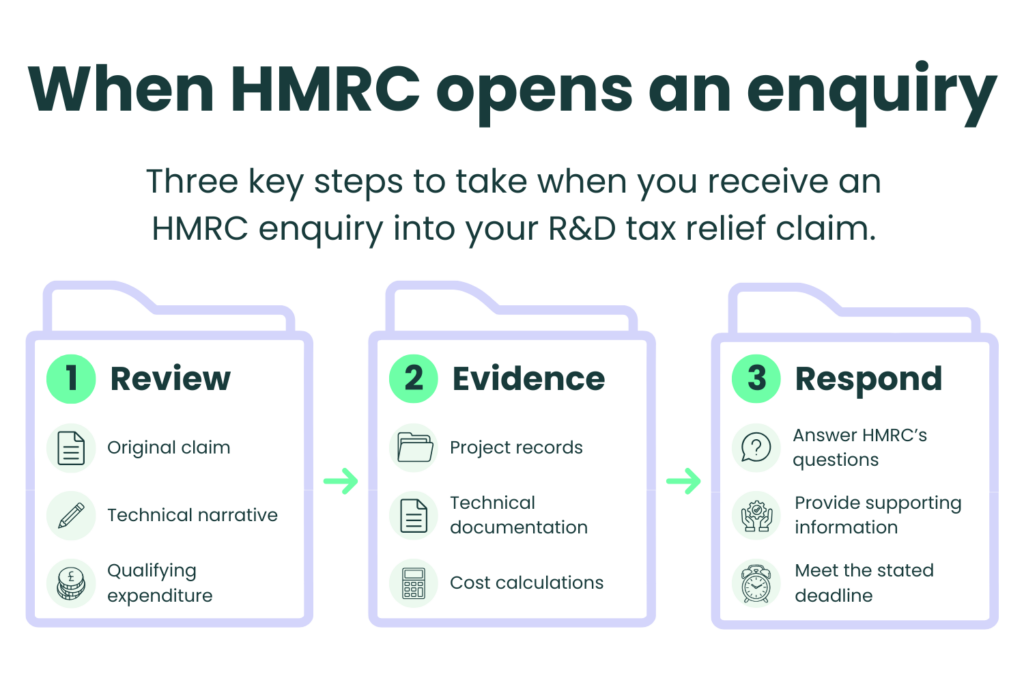
Receiving an HMRC enquiry into an R&D tax relief claim means a company needs to carefully review the original submission, understand exactly what HMRC is questioning and respond by the deadline stated in the correspondence.
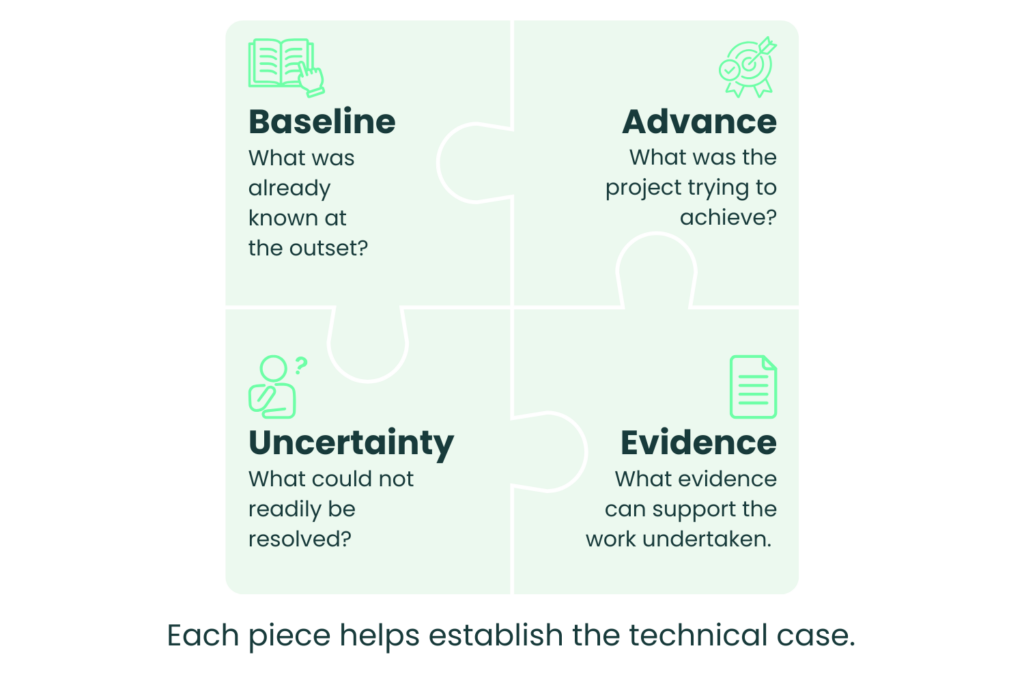
The first steps should include reviewing the technical narrative, qualifying expenditure and supporting evidence. HMRC may ask for further detail around the advance sought, the baseline knowledge available, the technical uncertainties encountered and why these could not readily be resolved by a competent professional.
In this article, we explain the immediate steps to take when an enquiry is opened, how to review and strengthen the supporting technical case and how to respond to HMRC’s questions clearly and professionally.
What is an R&D tax credit claim enquiry?
An R&D tax relief enquiry is a formal examination opened by HMRC to assess whether a company’s claim meets the relevant eligibility and compliance requirements.
HMRC may examine whether the activities and expenditure included in the submission qualify as genuine Research and Development for tax purposes. This can include reviewing the technical basis of the claim, the accuracy of the expenditure calculations and whether the relevant submission requirements have been met.
An enquiry does not automatically mean that a claim is incorrect or that HMRC suspects fraudulent activity.
Why does HMRC open enquiries into R&D tax credit claims?
In recent years, HMRC has increased its scrutiny of R&D tax relief claims, introducing stricter reporting requirements and compliance checks to address errors and fraudulent submissions. HMRC may open an enquiry to establish whether a claim meets the relevant eligibility criteria and whether the expenditure meets the definition of qualifying R&D expenditure.
One key area is the scientific or technological work undertaken. There must be a clear and detailed outline of the scientific or technological uncertainty faced and the work that followed in the attempt to resolve it. The project must also have sought an advance in science or technology, rather than simply an improvement to the company’s own knowledge or capabilities.
Another area that HMRC focuses on is qualifying R&D expenditure and cost apportionment. From staff costs to cloud computing, it is important that the expenditure included in the R&D claim follows the relevant eligibility requirements. Costs must be correctly identified and apportioned to qualifying R&D activity.
Lastly, HMRC may examine whether the claim meets the relevant submission requirements. This includes checking that the mandatory Additional Information Form was completed accurately and submitted before the company’s Corporation Tax return containing the R&D claim. HMRC may also check whether a claim notification form was required and submitted within the relevant deadline.
Through the maintenance of financial and technical records, companies can support their claims with accurate cost calculations and supporting documentation in the event of an enquiry.
What does HMRC look for during an R&D tax enquiry?
During an R&D tax credit enquiry, HMRC looks closely at whether the project meets the strict legal definition of R&D activity and whether the costs outlined also meets the definition of qualifying expenditure.
- Core focus areas include:
- Technical baseline and advances
- Scientific or technological uncertainty
- Contemporaneous evidence
- Financial accuracy and cost apportionment
How should companies demonstrate that their R&D activities qualify?
Companies must demonstrate that their R&D activities qualify under the legislation by providing robust evidence that clearly outlines that the project sought an advance in science or technology by resolving a genuine uncertainty that a competent professional in the relevant field could not solve with publicly available resources or standard industry knowledge.
Key supporting evidence includes competent professional assessments, contemporaneous project records, documentation of the existing baseline knowledge and a timeline of when the qualifying R&D activities began and ended. An unsuccessful attempt to resolve a qualifying uncertainty may still constitute R&D for tax purposes.
There are two mandatory administrative filings and a strict accounting requirement that companies must fulfill in this process:
- Additional Information Form (AIF): This online form must be submitted to HMRC before filing the Company Tax Return (CT600). If it is missing, HMRC’s automated systems will instantly reject or remove the R&D claim for that accounting period.
- Claim Notification Form: Where required (generally for first-time claimants or companies that haven’t claimed in the previous three years), this form must be submitted within six months of the end of the relevant period of account.
- Cost Apportionment Methodology: Companies must maintain clear, evidence-based calculations to show exactly how qualifying expenditure directly relates to the R&D work.
These requirements help establish whether the original claim was prepared and submitted in line with the R&D tax relief rules.
How must companies establish the baseline of scientific or technological knowledge?
In a compliant R&D claim, companies must establish a clear scientific or technological baseline by documenting what was already publicly known, accessible or capable within the relevant field at the start of the project.
To establish baseline knowledge, companies should research the field using resources such as academic journals, viewing clinical trials and technical publications to find existing data. Companies could also review the current industry standards through benchmarks, patents and public technical reports.
The analysis of current capabilities in the relevant field could also be a method of establishing the baseline of scientific or technological knowledge.
Finally, involving experts or lead engineers within the field who can truly understand the difference between state of the art research and development activity versus routine improvements.
What are some common triggers that weaken R&D claims?
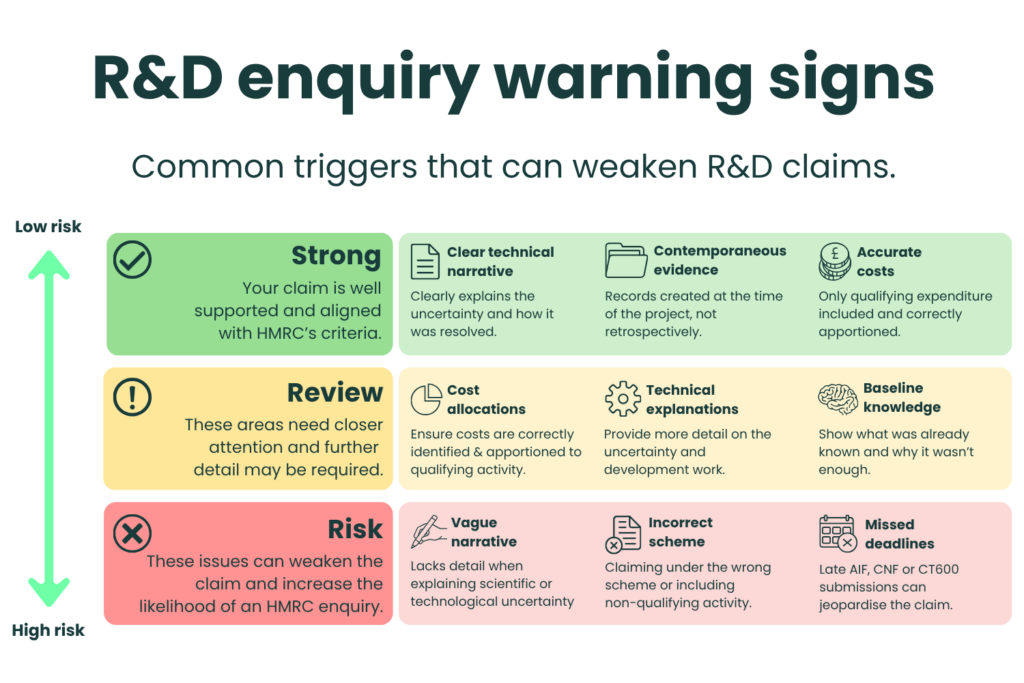
There are several triggers that can weaken the eligibility and accuracy of a UK R&D tax credit claim. This section is going to explore further into some of the most common triggers that could be the deciding factor of a company’s tax credit claim.
One of the most common triggers that can weaken an R&D tax relief claim is vague technical narratives. Failing to define specific scientific or technological uncertainties and confusing qualifying with non-qualifying activity can make it difficult to demonstrate that a project meets the relevant R&D tax relief requirements.
Other triggers include:
- Incorrect cost allocations
- Administrative and deadline failures
- Claiming under the incorrect scheme
How should companies respond to HMRC’s questions?
When it comes to gathering a response, companies should carefully address each question clearly and provide relevant technical or financial evidence to support the information submitted.
Responses should remain consistent with the original claim and accurately reflect the work undertaken. If a review identifies an error or any inconsistencies in the original submission, this should be addressed transparently rather than attempting to justify unsupported information.
It is absolutely essential that companies maintain copies of HMRC correspondence, the evidence provided and any additional information requested throughout the entire enquiry process.
How can Alexander Clifford help with R&D tax credit enquiries?
At Alexander Clifford, we specialise in R&D tax relief and support businesses throughout the claims process. Whether you’re preparing your first claim, have claimed R&D tax relief before, or have questions about an existing claim, our team can help you understand what’s required and how HMRC’s guidance applies.
R&D tax relief claims need to be prepared with care. HMRC expects businesses to demonstrate that qualifying activities sought to achieve an advance in science or technology by resolving scientific or technological uncertainty. Claims must also identify the eligible expenditure associated with those activities and provide sufficient evidence to support the position taken.
This is where our combination of financial and technical expertise matters. We review each claim from both perspectives, examining the qualifying R&D activities, the technical narrative and the expenditure being included. Our approach considers the relevant baseline knowledge, the uncertainties faced by the business and how a competent professional in the field sought to resolve them.
We also take HMRC compliance seriously. Every claim is reviewed carefully before submission, with the aim of identifying unsupported assumptions, inconsistencies or areas that may require further evidence. This helps businesses submit claims that accurately reflect their R&D activity and are supported by a clear technical and financial rationale.
While no adviser can guarantee that HMRC won’t open an enquiry, our enquiry rate is extremely low. We see this as an indicator of the care taken when preparing and reviewing claims, rather than a guarantee that a claim won’t be selected for further review.
HMRC enquiries into R&D claims are uncommon, but when one does arrive it can feel daunting. That’s where we step in. From the first letter to the final closure notice, our team guides you through every stage of the enquiry process, so you always know what HMRC is asking for, why they’re asking, and what happens next.
Because we prepared your claim, we already hold the evidence behind it. We draft the responses, set out the basis on which the claim was built, and answer each of HMRC’s requests with the technical and financial detail they need. You’re never left to interpret HMRC’s questions on your own.
Our record speaks for itself. Across every enquiry we have handled, whether raised by HMRC directly or picked up through our own internal review, we have successfully defended every claim.
Closing thoughts
When it comes to HMRC enquiries there is usually that panic stricken moment, but it does not have to be that way if you approach the situation with substantial R&D evidence and the right adviser.
An HMRC enquiry does not always mean that the claim is incorrect, it just means that the R&D evidence needs extra support for HMRC to see that it is genuine qualifying activity. Clear records can make an important difference during the enquiry process and where HMRC asks further questions, responses must be accurate, evidence-based and consistent with the original information submitted.
If you would like to know more about how we protect and support R&D claims here at Alexander Clifford, please don’t hesitate to get in touch.