01614578100
 hello@alexanderclifford.co.uk



Definition of Financial Risk Management
Financial risk management is an ongoing practice that seeks to reduce the impact of financial risks that a business may encounter during its operations.
With the aim of ensuring the business is achieving its financial goals and obligations, it ties in closely with cash flow management. The most important aspect of financial risk management is to avoid substantial risks that may jeopardise target profits.
Essential practices within financial risk management include:
- Risk assessment
- Vulnerability assessment
- Risk treatment
- Frequent risk monitoring
Are R&D investments high-risk, high-reward?
R&D can give your business a great opportunity for growth, but this volatile investment does come with financial risks. Research and development risks include assets tied up in capital expenditure, costly failed projects, and a strain on your cash flow.
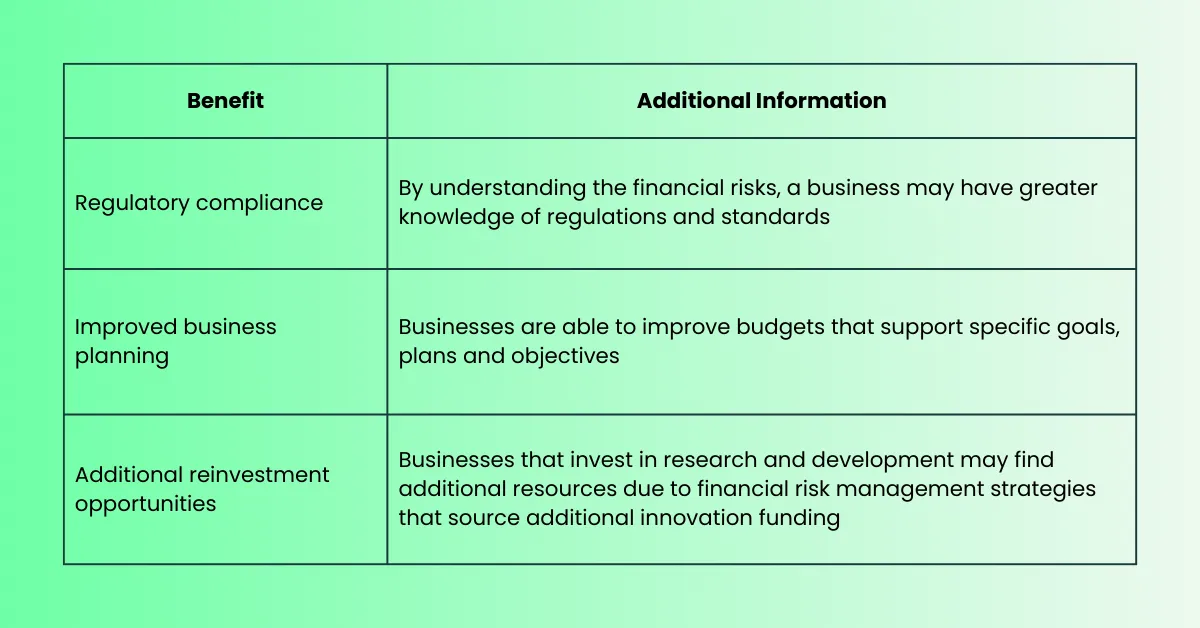
There are many benefits of financial risk management – higher claim values, fewer delays and reduced penalties. With good R&D risk management, you can get the best of working in R&D and improve your ROI/NPV, without the financial downfalls.
R&D risk management – how do I balance technical and financial risk?
In any R&D programme, there are two core risk types – technical and financial. The technical risk is the possibility that your project fails to overcome your scientific or technological uncertainty that allows it to qualify. Financial risk happens when you spend a lot on R&D with no commercial return.
This distinction between the two lies at the heart of the research and development risk definition. Understanding both is crucial to building effective R&D risk assurance and contingency planning.
Book a quick call back
How do R&D tax credits lessen strategic risk?
The UK’s R&D tax relief system directly supports reducing financial risk by refunding a percentage of your qualifying expenditure.For SMEs, this can be up to 27% of eligible costs. This acts as a risk buffer, by transferring part of your financial risk to HMRC. The government offers this contingency planning to safeguard you against unpredictable project outcomes.
How can I protect capital and secure cash flow?
One of the biggest challenges in R&D risk management is capital expenditure lock-up. Assets like equipment or prototypes tie up your cash that could be used elsewhere. By claiming back a portion of this expenditure, R&D tax credits allow better cash flow and easier budgeting for financial directors.
How can I mitigate risk in R&D with HMRC compliance?
While R&D tax credits lessen risks, submitting an inaccurate claim is risky in that you could receive an HMRC enquiry, rejection or penalty.Compliance risks create their own financial drains like delays, repayments and legal fees, so R&D risk management can be a balance.
Is the Additional Information Form (AIF) mandatory?
Since August 2023, every R&D tax credit claim must include an Additional Information Form (AIF). This is HMRC’s way of standardising how companies report their R&D activity. It should be clear, drafted by a competent professional, and make a good case.
Completing this accurately is key when considering how to mitigate risk in R&D. A well-prepared AIF and technical report will document why the resolution couldn’t previously be done by a competent professional.
What’s a good R&D risk assessment framework for CFOs?
To integrate risk management in research and development into your financial governance, finance leaders can adopt a three-step internal framework that connects operational controls with claim readiness.
1. Technical audit: how do I document uncertainty and advance?
Accurate R&D risk assessments begin with robust technical documentation. Keep contemporaneous records of experiments, tests, and development stages. Each entry should identify:
- The specific scientific or technological uncertainty you’re seeking a solution to
- The methodical work undertaken to find a solution
- Why the solution was not readily deducible by a competent professional
This process ensures your R&D projects meet HMRC’s definition of research and development, and reduces the chance of claim rejection.
2. Financial audit – how do I track qualifying expenditure?
Strong financial risk management depends on transparency. Track every eligible cost, like staff time, materials, software, and subcontractors. An accurate R&D risk assessment prevents errors that could trigger HMRC’s compliance checks, like rounded or unsubstantiated figures, and reinforces R&D risk assurance.
3. External review – can a specialist mitigate the risk of my claim?
R&D specialists can provide an objective review of your claim to ensure your submission meets current HMRC expectations. This step transforms R&D risk management and aligns your claim with the new merged scheme or ERIS (Enhanced R&D Intensive Support) rules (if you’re claiming for a post-April 2024 accounting period).
How R&D Tax Credits Work to Reduce Financial Risk
Funded by the British government, the R&D tax credit relief operates by allowing businesses to reclaim up to 27% of eligible expenditure. This form of innovation funding is available for research and development projects in a wide variety of industries, as long as the innovation is not in:
- The arts
- Humanities
- Social sciences (including economics)
With the option to carry forward R&D tax credits, businesses can choose to use the relief against future tax liabilities. This helps to improve financial risk management strategies, by building a safety net against potential financial losses.
What are the strategic advantages of R&D tax credit relief?
R&D tax credits can offer many benefits for your business – greater versatility, better collaboration, improved investments and lower expenditure. When considering risk management in research and development, it’s important to take into account these advantages.

De-risking innovation and incentivising UK growth with Alexander Clifford
Innovation is uncertain, but with proactive research and development risk management, structured R&D risk assessments, and expertly prepared R&D tax credit claims, R&D can be a financial asset to UK businesses.
At Alexander Clifford, we help ambitious companies integrate financial risk management for businesses directly into their R&D strategy, to give you the best R&D risk assurance.
Discover the benefits of financial risk management – contact us today to turn uncertainty into strategic advantage. We can offer R&D risk assessments that give you the best chance of a successful claim.
How to mitigate risk in R&D – FAQs
R&D risk management can leave you feeling baffled. Here are some key tips for reducing financial risk and securing your working capital:
What is the risk of an HMRC enquiry into an R&D tax relief claim?
The main research and development risk in claiming tax relief is non-compliance. Poorly evidenced claims may trigger enquiries, delaying payment and incurring penalties. Robust R&D risk assurance and professional review are the best defences.
How do R&D tax credits improve a company’s liquidity risk?
Tax credits can reduce your own investment and reduce loss by covering a percentage of your eligible costs, improving cash flow certainty, and reducing liquidity risk across future R&D projects.
How can I mitigate risk in my R&D claims?
The key to how to mitigate risk in R&D lies in clear technical documentation, accurate cost tracking, and professional oversight of your Additional Information Form (AIF) and technical narrative.
Can using subcontractors or overseas R&D increase risk?
Yes. HMRC applies strict rules on subcontracted and overseas R&D under the merged scheme. Expert review helps maintain compliance and reduce research and development risk during claim preparation.
What is financial risk management?
R&D risk management for your business means mitigating the possible risks your business could encounter to protect your profits. This involves anticipating losses, spotting vulnerabilities and adapting to changes.
Get a decision on your R&D eligibility from a qualified specialist in 15 minutes.